Top 5 Myths About Industrial Solar Panel
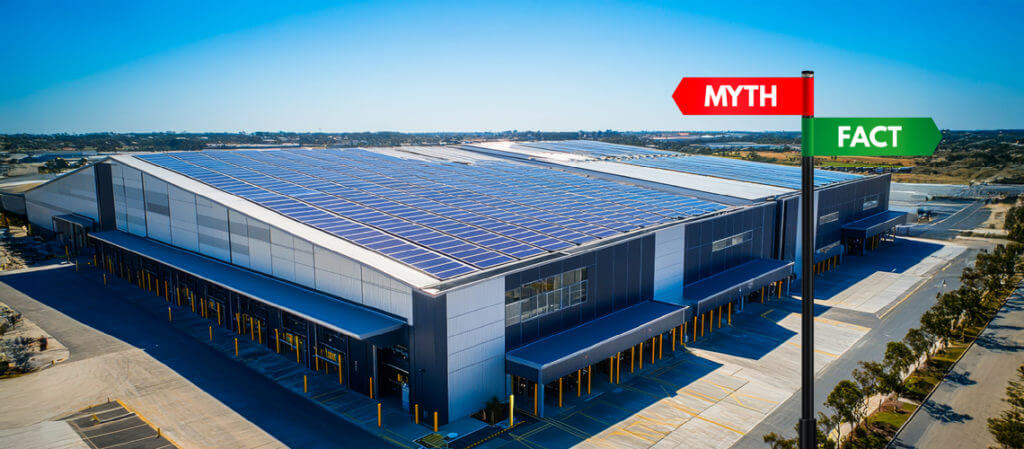
Top 5 Myths About Industrial Solar Panel Rahul Bhosale Author – September 5, 2025 Industrial buyers hear a lot of noise about solar. Some of it is useful. Much of it is a solar myth that keeps factories on the fence longer than they should be. This blog clears the most common solar panel myths with simple, practical facts that plant and finance teams can use. Here’s how! If you run a high load facility, you have probably heard these myths about solar panels: it does not work on cloudy days, it is too expensive, maintenance is a headache, heavy loads cannot be supported, and you need acres of space. These myths create delay and extra cost. Here is what the data and day to day operations actually show. Myth 1: Solar does not work on cloudy days Reality: Solar generates on cloudy days too. Output is lower than a clear noon, but panels still produce usable energy from diffused light. Most industrial systems are modeled on annual irradiation, not a perfect sunny day, so the yield forecast already includes cloudy hours and monsoon weeks. What operations teams should know Modern inverters and MPPT keep arrays productive during changing light. A mixed strategy can smooth peaks and troughs: rooftop solar for daytime baseload and open access or grid for the rest. Real performance is tracked against a plan vs actual chart, not a single sunny day snapshot. Why this solar myth persists: People compare the worst hour to the best hour. Annual metered data tells a different story. Myth 2: Industrial solar is too expensive Reality: The lifetime cost of solar power is often below the grid tariff for industrial users. You can own the plant through CAPEX or buy power through OPEX or third party models. The right financing removes the budget blocker. What finance teams should know CAPEX: Accelerated depreciation, GST input credits, and 2 to 3 year payback are common in healthy tariff markets. OPEX or third party: Zero upfront, predictable per unit tariff, 6 to 7 year effective ROI with 15 to 20 years of savings. Group captive: Partial equity, lower cross subsidy charges, strong per unit savings for MSMEs. How to decide quickly Ask for a decision ready sheet: LCOE vs current tariff, cash flow by quarter, sensitivity to 3 variables only. Compare partners, not just price per kW. Delivery time and guaranteed generation drive real solar saving. Industrial Solar Readiness Checklist A 60 second preflight before you request quotes Load profile ready: Weekday and weekend kWh by hour Roof map: Usable area, obstructions, future HVAC plans Policy fit: Net metering or net billing in your state Finance path: CAPEX, OPEX, or group captive shortlist Data plan: What you will report for ESG and to whom SLA essentials: Cleaning frequency, uptime target, response time Risk cover: Generation guarantee and spare strategy Myth 3: Maintenance is difficult Reality: Industrial solar maintenance is routine work when designed right. Most tasks are scheduled and predictable. What the O and M actually includes Cleaning: A set frequency based on local soiling. Many plants use fortnightly cleaning or water saving methods. Preventive checks: Strings, inverters, earthing, surge protection, structure. A standard checklist keeps it tight. Monitoring: 24 x 7 dashboards with alerts for low string current, abnormal voltage, inverter trips, and grid events. Corrective support: SLA based response and a small stock of critical spares cut downtime. Why this solar panel myth persists: Early systems lacked monitoring and a single point of accountability. Modern EPC plus O and M contracts remove the chase. Myth 4: Solar will not work for heavy power loads Reality: Solar works well for heavy daytime loads and can be combined with open access power to scale beyond the roof. The plant does not need to carry every minute of your peak to be valuable. Planning tips for high load sites Size the rooftop system to offset daytime baseload without back feeding issues. Net metering or net billing rules apply by state. Add open access supply to bring in large blocks of clean energy at a competitive per unit price. Use plant data: shift schedules, compressors, chillers, presses, HVAC, and typical weekend loads. A design matched to your profile drives true solar saving. Result: A blended strategy reduces tariff exposure, stabilizes cost, and supports ESG reporting. Myth 5: Panels need too much space Reality: You can get meaningful energy from existing assets without buying new land. Where the space comes from Metal sheet or RCC rooftops with optimized racking and walkway planning. Carports that turn parking into generation. Higher efficiency modules that lift output per square meter. Open access when the roof is saturated. Power is generated off site and delivered over the grid. Quick rule of thumb: Space is important, but design and model selection often matter more. Conclusion: Truths about industrial solar adoption Industrial solar is a proven way to lower power cost, reduce Scope 2 emissions, and increase tariff certainty. Most myths about solar come from old projects, partial information, or one size fits all quotes. Ask for an annual yield model, a clear financing path, and a service SLA you can measure. If you want help turning evaluation into numbers you can take to the board, Aara Energy focuses only on industrial solar installation and builds plants around your load, your roof, and your compliance needs. The outcome is simple: dependable kWh and real solar saving. Related Blogs CAPEX vs OPEX Solar: Differences, Benefits and How to Choose the Right Model Learn more Top 5 Myths About Industrial Solar Panel Learn more The Aara Advantage: Real Savings for Real Businesses Learn more